Tuesday, June 25, 2013

Stand tall, you short stories!

ISBN-10: 0812993802
ISBN-13: 9780812993806
Published: Random House, 01/08/2013
Pages: 272
Language: English
First, a list of things that are both short and good (or essential):

*Shortstops (baseball)
*Short stacks (a reasonable amount of pancakes)
*Shorts (abbreviated pants)
*Short stories

This last one apparently gives some folks a moment of pause. I've long been a champion of the form, but for many readers, the short story is a lesser version of a novel, something too brief to encompass an entire story or too artsy to be immersive. My goal, as a bookseller, reader, writer, and all-around lover of the written word, is not to push short stories over novels, but to give them their chance, to keep them from being relegated to dusty shelves or heaps in a store-room. I think of past decades, when the short story was serialized or featured prominently in national magazines, and wondered what prompted its decline. The writerly folklore is that, once upon a time, you could make your living publishing short stories. That's sort of akin to the myth of $0.75 gasoline or soda fountains on every main street in every town. Much like the decline of journalism (or corollary with the decline of journalism?), it's getting harder and harder to find venues that pay writers decently for short fiction, and perhaps as a result, the quality of said materials varies widely.

Still, like LPs and newspapers, I have some faith that the genre won't go the way of the snow leopard. Increasingly rare, sure, but still an invaluable part of literature as a whole.

If you're looking to dip your toes in the pool of short fiction, there are several accessible collections I'd recommend.

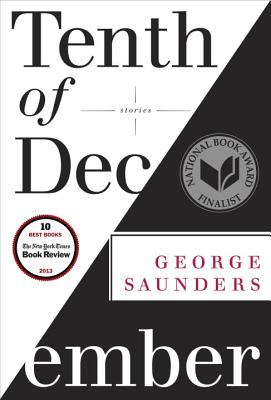
George Saunders' much-praised Tenth of December epitomizes what a short story can accomplish. This is masterful stuff, prose so thoughtful and taut that it should be required reading for anyone looking to do a creative writing course. The New York Times raved, uncharacteristically enough, and other writers often cite Saunders as a veritable sensei of prose. This is one of my favorite collections of all time, and certainly my favorite book of last year.

Kelly Link's Pretty Monsters is a 180 degree turn from Saunders' style, and that's part of why it made this list. Equally captivating but entirely different, these tales run the gamut from teenage werewolves to post-apocalyptic vacations, and where Saunders employs stoicism and profundity, Link balances whimsy and reality, placing equal stake (no pun intended) in a character's status as a vampire and their difficult love life. This is one I'd hand to anyone who likes YA, sci-fi, or magical realism (emphasis on the "magical").

And for the sake of diversity -- because what is literature if not diverse? -- I'd also like to draw your attention to Lydia Davis' Collected Stories, which is less tome and more surprisingly-slender-volume. The manageable size is due to Davis' propensity for flash fiction, with some stories clocking in at a mere two or three sentences. That's not to say anything here is skimpy; because she's one of the best short story writers in the country, she's able to erect and destroy an entire world in a matter of a few words. If you think I'm a liar (hey, you're entitled), you can trust in the opinion of the folks at Man Booker, who gave her their International Prize.

I encourage you to give one of these collections a try, or pick up a different one. This barely skims the surface of short story collections I keep close by on my shelves so I can pick them up whenever the mood strikes. Like old friends, these are tales whose characters and themes cycle through my mind often, revisiting when they have something else to tell, blooming perennially.

Sunday, June 23, 2013

A Recipe for a Perfect Summer Afternoon

ISBN-10: 1476733953
ISBN-13: 9781476733951
Published: Simon & Schuster, 03/12/2013
Pages: 528
Language: English
Wake up late, eat brunch, play with your cats, and then let the good times roll.

1. Eat an ice cream sandwich at Foster's Market. The Flyleaf staff is addicted, according to the number of wrappers currently occupying our kitchen trashcan.

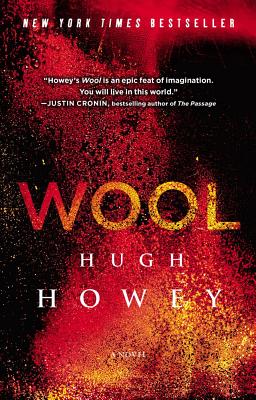
2. Pick up a book that'll transport you from Chapel Hill or Carrboro to... anywhere, really. I was hankering for something dystopian and science-fiction based, so I went for one of fellow blog author Hank's picks, Wool, by Hugh Howey, whose premise so far reminds me a lot of Lois Lowry's The Giver. Other good picks I'd recommend, which range from sci-fi to literary fiction to easy-to-read YA: Michael Chabon's The Mysteries of Pittsburgh, Hilary Jordan's When She Woke, Italo Calvino's Invisible Cities (Mike read this one), or anything by Sarah Dessen, the master of the summer beach coming-of-age tale.

3. Head to Jordan Lake, Duke Gardens, the Eno River, or if you're feeling particularly strapping, the Occoneechee trail in Hillsborough (which is steep but breathtaking!). All of these are within half an hour of most towns in and around the Triangle, and all of them offer rocks, beaches, or benches where you can plop down with your book of choice.

4. Take an (intentional or unintentional) nap in the sunshine. Be sure to wear sunscreen!

CHOOSE YOUR OWN ADVENTURE:
5. If you need A/C, check out an arthouse or avant garde movie at The Chelsea.
 -or-
If you want more sunshine, go grab a cocktail on Lucha Tigre's patio.

6. Treat yourself to some mussels or a summer salad at Kitchen, or head to Neal's Deli for a pimiento cheese sandwich.

7. Head home, put on a record, and grow even more immersed in what might be your new favorite book.

8. Meet friends for a leisurely summer hang at a local restaurant with more outdoor seating -- Milltown, Carrburrito's, Caffe Driade, etc.

9. Head to bed early, and then read into the wee hours of the night.

Poetic License

ISBN-10: 1594205388
ISBN-13: 9781594205385
Published: Penguin Press HC, The, 06/18/2013
Pages: 400
Language: English
The "cerebral thriller" is inherently difficult to pull off. A thriller typically requires violence and at least a pinch of fear, both of which appeal to the reader's unthinking reptilian brain. The cerebral work typically appeals to the brainier part of our brains, but risks feeling cold and joyless. Marrying these too seemingly irreconcilable genres is the unstated ambition of Max Barry's fantastic new science fiction genre-hybrid Lexicon, a novel that manages to include car chases, Charlotte Bronte quotes, semiotics, information-age paranoia, and even a fair-sized dollop of romance. As author and critic Lev Grossman writes on the back of the book, Lexicon is "about as close as you can get to the perfect cerebral thriller: searingly smart, ridiculously funny, and fast as hell. Lexicon reads like Elmore Leonard high out of his mind on Snow Crash." I wanted to write that Lexicon reads like China Mieville on crank, but then I would have to explain that China Mieville reads like Philip K. Dick on crank, and we would get into a whole Russian Nesting Doll scenario. 

Personally, I don't enjoy book reviews/recommendations that serve as plot summaries, but suffice it to say Lexicon involves a class of people called "poets" that manipulate language in order to very literally control the general population. The action bounces back and forth in time and perspective constantly, gradually honing in on a horrific incident that shapes the lives of regular-guy Wil and troubled "poet" Emily Ruff. The book is full of themes and ideas, sometimes referenced directly by email exchanges, newspaper articles, and message board chats Barry inserts between chapters. Thankfully, however, the narrative is so relentlessly fast and the characters recognizably human that Lexicon never feels didactic or preachy. He has his points, he makes them, and everyone has fun. Who says intense pessimism can't be a blast?

Friday, June 21, 2013

How to Write a Review/Endorsement

ISBN-10: 1594487294 ISBN-13: 9781594487293 Published: Riverhead Hardcover, 03/05/2013 Pages: 240 Language: English
When you are writing a review/endorsement of an extremely clever novel that uses the format of a business "self-help" book to tell a narrative entirely in the second-person, it is important to write a thoughtful, considerate blog post without needless rhetorical gambits or meta-tomfoolery. In writing a review/endorsement, sincerity is key, but you are a young person with a college degree who never says anything in four words that could be said in four paragraphs. So, you proceed with your endorsement of Mohsin Hamid's newest novel: How to Get Filthy Rich in Rising Asia, which you know to be Hamid's third novel, and a follow-up to his attention-grabbing work The Reluctant Fundamentalist, which has recently been made into a film that you have not seen, but automatically assume is worse than the book that inspired it. 

You might wish to point out that the novel has many similarities with your beloved Great Gatsby: it is a rags-to-riches story featuring an ill-fated love, the prose is florid but wry, it is slight in length but chock-full of ambition, and it seems somehow zeitgest-capturing without sacrificing universal themes. For as much as Hamid's book is about portraying an economic/social moment in time without skimping on post-colonial satire or uncomfortable truths, it is also about redemptive love and the search for what makes life worth living. If "How to..." can at times read as angry or even broadly misanthropic, it is that, but Hamid frequently condemns the mob while showing great compassion for the individual. Even after finishing the novel, you are not sure where it was meant to have taken place-- no cities or people are named and the situations depicted are common in all of "Rising Asia." Specificity is the soul of narrative, though, and Hamid is careful to give attention and consideration to even minor, initially unsympathetic characters. You remember vividly a scene in which a gunman who has earlier brutally threatened our protagonist is preparing for another assignment: 

"Later that week the boyish gunman is once more given instructions to encounter you. He washes and dresses as usual, listening to movie songs on a promotional soda-can-shaped radio and shaving above his upper lip in the aspiration of one day provoking a mustache. His mother and sister bid him good-bye. He is low on funds and so he purchases only a small quantity of petrol for his motorcycle and a single loose cigarette. He chooses an intersection on your route with a giant billboard advertising antibacterial soap, and waits, smoking, a new habit good for making him forget that he is hungry."

In your opinion, that single paragraph is beautiful in its simplicity, and, moreover, is essential to making Hamid's world three-dimensional. Like one of your idols, Kurt Vonnegut, you feel that Hamid's satire, his irony, his anger, his misanthropy, is all earned by an underlying reservoir of deep humanity. You consider that you haven't really accomplished your stated aim of describing how to write a book review, and that your humorous conceit probably was unnecessary and poorly executed. You know, at least, that anything can be salvaged by a great Vonnegut quote, and so you write: "There's only one rule that I know of, babies—God damn it, you've got to be kind." You don't know Mr. Hamid, and probably never will, but you feel he would agree with the sentiment.

Thursday, June 20, 2013

Oh, to be young, rested, and in the mood to cook!

ISBN-10: 1452101248
ISBN-13: 9781452101248
Published: Chronicle Books, 03/01/2011
Pages: 288
Language: English
So far in this long, hard-lived life of mine (I'm in my early twenties, recently graduated college, and have in no way lived a hard life), I've learned that, when it comes to cookbooks, it's sink or swim. Some work, some don't, and when they don't, they really, really don't.

Part of it, surely, is that my kitchen supplies are spotty (I just discovered, upon moving, my lack of measuring cups), and another part is the fact that I've been spoiled by microwave mac 'n' cheese and my family's leftovers. Ask me to rice a potato and I turn deathly pale. Ask me to slice something thinly and you might get some awkward-looking cubes.

Up til now, the "hit" part of "hit or miss" has been largely comprised of The Smitten Kitchen. To anyone who's visited the internet in the last, say, year or so, Deb Perelman, the blog's author, is a familiar voice, one that guides you calmly and confidently through the steps it takes to make Japanese pancakes or bake cardamom-spiced brownies. Her cookbook lives up to her blog's user-friendliness and lack of fussiness, and similarly straddles that oh-so-fine line between absurd foodie weirdness and boring, been-there-done-that dishes. I say, let us not veer too far down exotic lane (where am I supposed to buy sumac in Mebane?), but also let us not fall back on meatloaf for every meal.

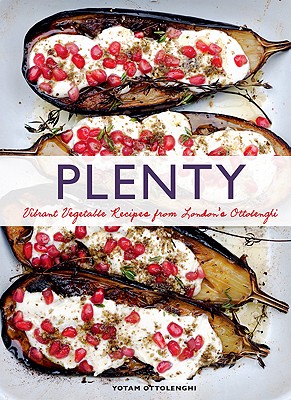
Today, I decided I'd try Yotam Ottolenghi's Plenty, a vegetarian cookbook with gorgeous photographs (oh, those pomegranate seeds!) and smartly-organized indexes -- you can look up recipes by ingredient and heft. As cookbooks go, it's pretty affordable ($35.00) and it would make a gorgeous gift for anyone that likes seasonal food, Middle Eastern ingredients, or recipes on the eccentric side.

As always, I'd like to know what I'm missing. Are you sensing a trend yet? Please chime in below with comments on your favorite cookbooks, be they traditional or odd. With last night's veggie pancake success under my belt, I'm feeling pretty confident that Ottolenghi's poached eggs and bulgur pilaf is within my grasp.

Wednesday, June 19, 2013

The Guardian on J.M. Coetzee's new novel, The Childhood of Jesus


ISBN-10: 0670014656
ISBN-13: 9780670014651
Published: Viking Adult, 09/03/2013
Pages: 288
Language: English
I found Benjamin Markovitz's Guardian review (or maybe non-review?) of J.M. Coetzee's The Childhood of Jesus pretty fascinating, in that it didn't seem to make any definitive judgments at all. It seemed content to stick this game out on the sidelines while everybody else makes their criticisms, which part of me admires -- I've read many a book that didn't really sink in until I'd had time to let it marinate. I have a feeling that the one I'm reading now, Ann Patchett's The Magician's Assistant, will follow that very path.

TL;DR? A choice quote from the review: "What it reminds me of most is Peter Handke's Kaspar – an experimental stage play about the way language restricts the pure freedom of a childish consciousness. But it's also a little like Werner Herzog's movie, The Enigma of Kaspar Hauser – a more realist film about an unsocialised man, trying to find his feet in society. Coetzee has always had the enviable ability, in a writer, to make a virtue of his limitations. The prose is very plain; the characters are a little abstract; the questions they ask aren't quite as interesting as they suppose. Coetzee knows all this, but where it leaves the reader I'm not so sure." Sounds almost like Waiting for Godot to me, in its minimalism and metaphor.

I just got my advance reader's copy of the book in the mail this morning, so I'm hoping to have a judgment (or non-judgment) of my own pretty soon.

Tuesday, June 18, 2013

Graphic by Nature: Some Illustrated Books for Real Live Grown-Ups

ISBN: 140123755X Published: Vertigo, 05/15/2012 Pages: 144
Language: English
Like Hank, I too am a nerd. One who will extoll to you the virtues of both hipster footwear (does anyone else really want a pair of these?) and decidedly un-hip literature (let's talk about how good Sisterhood Everlasting, the final installment of the Sisterhood of the Traveling Pants, was). While I'm happy to boast (humblebrag or otherwise) about the things of which I have a comprehensive knowledge (all of Sarah Dessen's novels and the manner in which geodes are formed, for starters), let's also consider this blog a vehicle for me to catch up on things at which I've failed. This time around, I'd like to discuss graphic novels & comics.

Rarely do you see a classic literature connoisseur dressing up as Captain Ahab -- I mean, if you're out there, you go, Moby Dick fan! But in the realm of graphic novels, fans are more than willing to integrate their favorite novels into their lives. You've got comic-cons on one end of the spectrum and themed pint glasses on the other. There is headwear that can turn you into your favorite My Little Pony and there are plenty of blogs, magazines, and forums that will let you discover and discuss to your heart's content. When people talk about a comic book culture, they're not exaggerating, and when you're a total newb, it's hard to know exactly where one starts. Personally, my aim isn't to become the foremost expert on Batgirl, but I don't want to go mixing up Bruce Wayne and Clark Kent -- awkward!

I might be in the minority but I'd love nothing more than to enter this world of pictures and text and come out with a community, whatever that entails. Maybe it's just finding a few Chapel Hill Comics or Ultimate Comics employees who are willing to discuss what's new. Maybe it's debating the merits of Dante's Inferno in traditional versus graphic novel form with my coworkers here at Flyleaf. Maybe, just maybe, it's becoming a true graphic novel nerd, one that knows all of the Watchmen and can tell you the plot of Maus backwards and forwards.

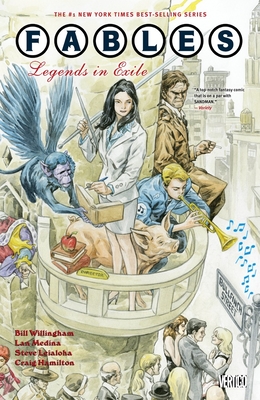
I'm a work in progress, but my first few forays into the world of graphic novels have been major successes. On a whim, I picked up Translucent, a manga about a girl with an invisibility disorder that grappled with teenage issues as gracefully and playfully as a Judy Blume book. The real earth-shaker was Alison Bechdel's Fun Home: A Family Tragicomic, which moved me to tears and redefined, for me, the limits of a memoir. Next on the agenda is one about a cat (I told you I was a nerd) called Chi's Sweet Home, which might or might not be for children (does it look like I care?). I also purchased Fables: Volume 1, which was a New York Times bestseller and charts the lives of fairytale characters in modern New York City.

In the meantime, I'm looking for suggestions -- for the initiated or the uninitiated, what are your favorite titles? Comment below, and help a sister out.